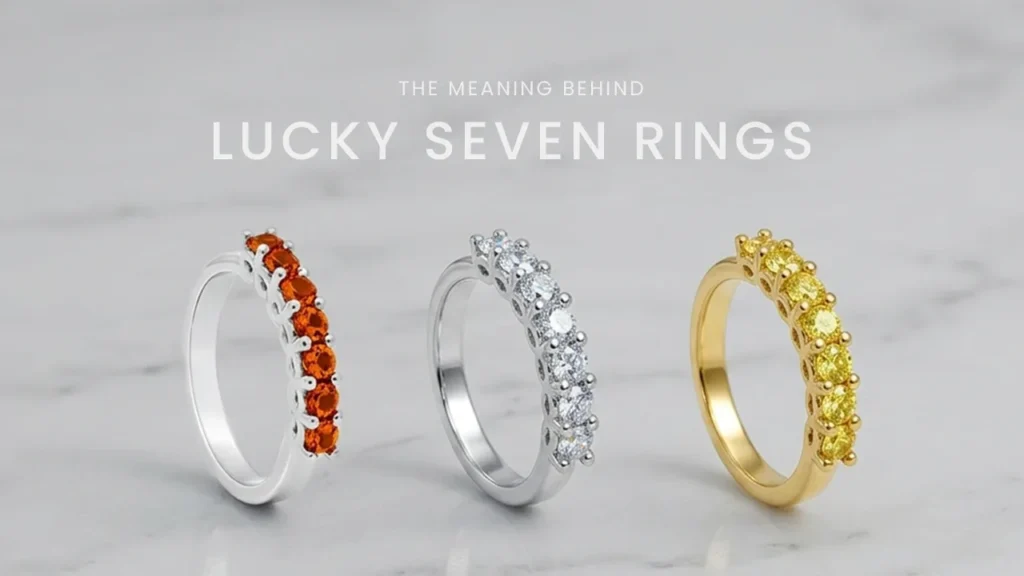
Choosing a ring metal feels simple until you’re actually standing there comparing options. Gold looks warm and classic, silver feels light and every day, and white gold sits somewhere in between. Here’s a straightforward breakdown to help you figure out which one actually fits your life.
Gold rings have that warm, rich tone people usually picture when they think of fine jewelry. They pair well with warmer skin tones and tend to feel a bit more traditional or formal. Silver rings lean cooler and lighter, both in color and in feel, and they’re often more budget friendly too. White gold rings are actually gold at their core, just alloyed with other metals and plated with rhodium to get that bright, silvery look. So if you like the silver aesthetic but want the durability gold is known for, white gold jewelry ring options give you a bit of both worlds.
Rose gold rings are a bit different from all three. They get their pink tint from a copper alloy mixed into the gold, giving them a warmer, softer look than either regular gold or white gold. Compared to white gold specifically, rose gold feels more romantic and vintage, while white gold leans more modern and neutral.
Understanding Gold Purity and Plating
A ring 14kt gold means the piece is 14 parts gold out of 24, mixed with other metals for added strength. Pure gold, or 24K, is actually too soft for everyday jewelry, which is exactly why 14K has become such a popular standard. It holds up well to daily wear while still keeping a solid gold content.
Gold-plated rings work differently. Instead of being solid gold throughout, they have a thin layer of gold applied over a base metal, usually brass or silver. This makes them noticeably more affordable, but that thin layer can wear off over time with regular use. Solid gold rings, on the other hand, keep their color and quality for years since the gold runs all the way through, not just on the surface.
Durability, Maintenance, and Everyday Wear
All three metals can handle daily wear, but they age differently. Gold resists tarnishing well and holds its color for a long time. White gold needs occasional rhodium replating since that bright coating can wear thin over the years, especially with frequent hand washing or exposure to lotions. Silver is the most reactive of the three and can tarnish faster, though a quick polish usually brings the shine right back.
If low maintenance matters most to you, gold is generally the easiest option long term. If you love the white gold look and don’t mind occasional replacing, it’s still a great everyday choice. And if budget is the priority, silver or gold-plated pieces offer that same aesthetic without the higher price tag, just with a bit more upkeep involved.
For stacking multiple rings together, mixing metals like gold, silver, and white gold has become a popular styling choice rather than something to avoid. It gives a stack more depth and personality instead of looking too matched.
Frequently Asked Questions
What is the difference between gold, silver, and white gold rings?
Gold is warm-toned and classic, silver is cooler and lighter, and white gold is gold alloyed and plated to look silver-toned.
Which is better, gold or silver rings?
Neither is objectively better, it comes down to skin tone preference, budget, and personal style.
What are white gold rings?
Rings made from gold mixed with other metals and coated in rhodium to achieve a bright, silvery finish.
What are the benefits of white gold rings?
They combine gold’s durability with a modern, silver-like look that pairs well with most styles.
What are the benefits of gold rings?
They resist tarnishing, hold their color well, and have a timeless, warm appearance.
What are the benefits of silver rings?
They’re generally more affordable and have a light, versatile look that suits everyday wear.
What is a 14K gold ring?
A ring made from 14 parts gold out of 24, alloyed with other metals for added strength.
What does 14K gold mean?
It refers to the gold purity level, meaning 14 out of 24 parts are pure gold.
What is a rose gold ring?
A ring made from gold mixed with copper alloy, giving it a distinct pink tone.
What is the difference between rose gold and white gold?
Rose gold has a warm pink tint from copper, while white gold has a cool, silvery finish from rhodium plating.
What are gold-plated rings?
Rings with a thin layer of gold applied over a base metal like brass or silver.
What is the difference between gold-plated and solid gold rings?
Gold-plated rings only have a thin surface layer of gold, while solid gold rings are gold all the way through.
Are gold rings good for everyday wear?
Yes, gold holds up well to daily use and resists tarnishing.
Are white gold rings good for everyday wear?
Yes, though they may need occasional rhodium replating over time.
Are silver rings good for everyday wear?
Yes, though they tarnish faster and need more frequent polishing.
Which ring metal is most durable?
Solid gold, including white gold, tends to be more durable than silver or gold-plated pieces.
Which ring metal is easiest to maintain?
Gold generally requires the least upkeep compared to silver or white gold.
Which ring metal is best for stacking?
Any of them work well, and mixing metals has become a popular stacking trend.
How do you choose the right metal for a ring?
Consider your skin tone, budget, and how much maintenance you’re willing to do.
Which gold ring is best for women?
It depends on personal style, though 14K gold rings are a popular balance of durability and value.
Explore our full range of gold rings, silver rings, and white gold rings at gaura.style.