Gold-plated rings have quietly become one of the most popular ways to get a gold look without a gold budget. They’re everywhere right now, and once you understand how they’re actually made and cared for, it’s easy to see why so many people choose them over solid gold. Here’s a full breakdown, including honest answers to the questions people ask most.
Gold-plated jewelry works by taking a base metal, usually brass, copper, or sterling silver, and coating it with a thin layer of real gold through a process called electroplating. The base gives the ring its structure and strength, while the gold layer on top gives it that warm, classic shine. Since the gold is only on the surface rather than running all the way through, gold rings made this way cost a fraction of what solid gold pieces do, which is exactly why they’ve become such a go-to option for everyday jewelry lovers.
Styles Available in Gold-Plated Rings
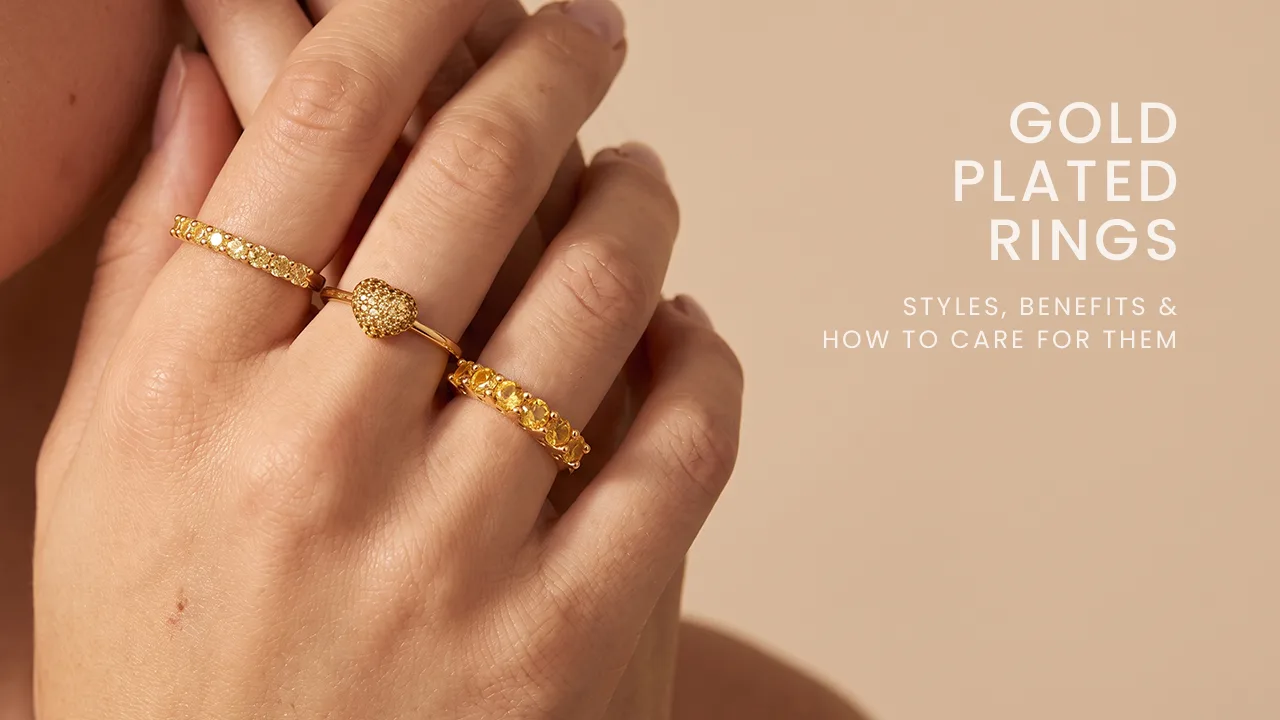
One of the best parts about gold-plated rings is the sheer variety available. Because the base metal is affordable, brands can experiment with more detailed and elaborate designs without the price climbing the way it would in solid gold. You’ll find everything from delicate stacking bands to chunkier statement pieces, rings with cubic zirconia stones, engraved details, and even trendier shapes that might feel too risky to invest in at solid gold prices. This makes gold-plated pieces a great way to try out styles or trends without a long-term financial commitment.
Frequently Asked Questions
What are gold-plated rings?
Gold-plated rings are rings made from a base metal, like brass or sterling silver, that have a thin layer of real gold bonded to the surface through an electroplating process. The base metal gives the ring its shape and durability, while the gold layer provides the color and shine people associate with fine gold jewelry. They look nearly identical to solid gold at a glance, but the construction underneath is quite different.
How are gold-plated rings made?
The process starts with a base metal ring that’s cleaned and prepared so the gold can bond properly to its surface. The ring is then submerged in a gold solution and an electrical current is passed through it, which causes a thin layer of gold ions to attach evenly across the metal. The thickness of this layer varies by manufacturer, and better quality pieces tend to use a slightly thicker coating that holds up longer over time.
Are gold-plated rings real gold?
In a way, yes and no. The outer layer is genuine gold, so it’s not fake in the sense of being painted or fully synthetic. However, the ring as a whole isn’t solid gold since the core is a different, cheaper metal entirely. So while there’s real gold involved, the ring isn’t gold all the way through the way a solid gold piece would be.
How long do gold-plated rings last?
This depends heavily on the thickness of the gold layer and how often the ring is worn. A well-made gold-plated ring with a decent coating can look great for one to three years with reasonable care, while cheaper pieces with a thinner layer might start showing wear within just a few months of regular use. Rings worn daily and exposed to friction, like hand washing or typing, tend to wear down faster than pieces saved for occasional wear.
Are gold-plated rings durable?
The base metal itself is usually quite sturdy, so the ring’s structure holds up well. What isn’t fully durable is the gold coating specifically, which can thin out and eventually reveal the base metal underneath with enough wear. So the ring won’t break easily, but its gold appearance isn’t permanent the way solid gold’s color is.
Do gold-plated rings tarnish?
The gold layer itself doesn’t tarnish in the traditional sense, but once that layer wears thin, the base metal underneath can become exposed and may tarnish or discolor depending on what it’s made from. This is more about the coating wearing away than the gold itself tarnishing.
Do gold-plated rings turn green?
Sometimes, yes, particularly if the base metal is copper or a copper alloy and the gold layer has worn thin. That greenish tint comes from the base metal reacting with skin oils, moisture, or air once it’s exposed, not from the gold itself. Choosing a ring with a thicker plating layer or one plated over sterling silver rather than copper alloy tends to reduce this issue significantly.
Can you wear gold-plated rings every day?
Yes, plenty of people do, though daily wear will naturally speed up how quickly the plating wears down compared to occasional use. If you want to wear a gold-plated ring every day and keep it looking good longer, choosing a piece with a thicker gold layer and being mindful about exposure to water and chemicals makes a real difference.
Are gold-plated rings waterproof?
Not exactly. They can handle brief, occasional contact with water without immediate damage, but repeated exposure to water, especially with soap, chlorine, or salt involved, speeds up how quickly the gold layer wears away. It’s best to think of them as water-resistant rather than fully waterproof.
Can gold-plated rings get wet?
Yes, a little water occasionally won’t ruin the ring right away, but consistent or prolonged exposure will shorten its lifespan. Quick contact, like washing your hands once, isn’t a big concern, but showering, swimming, or washing dishes regularly while wearing the ring will wear down the plating faster than normal.
How do you care for gold-plated rings?
The biggest thing is minimizing exposure to moisture, chemicals, and friction. Take the ring off before showering, swimming, applying lotion or perfume, and doing household chores involving water or cleaning products. Store it separately from other jewelry to avoid scratching, ideally in a soft pouch or a lined jewelry box rather than tossed in with other pieces.
How do you clean gold-plated rings?
Use a soft, dry or slightly damp cloth to gently wipe the surface after wearing it. Avoid soaking the ring or using any harsh jewelry cleaners, ultrasonic cleaners, or anything abrasive, since these can strip the thin gold layer much faster than normal wear would. A gentle wipe is really all a gold-plated piece needs to stay looking fresh.
How do you keep gold-plated rings from tarnishing?
Keep the ring dry, avoid direct contact with lotions and perfumes, and store it away from air and moisture when you’re not wearing it, ideally in an airtight bag or a lined box. Reducing how often it comes into contact with skin oils and chemicals is the single biggest factor in how long the coating stays intact.
Can you shower with gold-plated rings?
It’s better not to make a habit of it. Shower products like soap, shampoo, and hot water all speed up wear on the plating layer. An occasional shower without removing the ring probably won’t cause major damage, but doing it regularly will noticeably shorten how long the gold finish lasts.
Can you sleep with gold-plated rings?
It’s generally fine occasionally, but sleeping with any ring nightly increases the chances of it catching on fabric, rubbing against surfaces, or experiencing friction that gradually wears down the plating. If you want the ring to last as long as possible, taking it off before bed is a simple habit that helps.
Are gold-plated rings good for sensitive skin?
It depends on the base metal underneath. If the base contains nickel or another metal you’re sensitive to, once the gold layer wears down, that exposed metal can cause irritation. Choosing a gold-plated ring over a hypoallergenic base, like sterling silver, is a safer option for people with sensitive skin.
Are gold-plated rings worth buying?
For most people, yes, especially if you want the gold look without a big investment, or you like to change up your jewelry with trends more often. They’re a practical, budget-friendly way to enjoy the aesthetic of gold, as long as you go in understanding the coating won’t last forever the way solid gold would.
How much are gold-plated rings worth?
Their resale or material value is quite low since the gold content is minimal and mostly on the surface. Their real value lies in the design and how the piece looks and functions as jewelry, not in the small amount of actual gold used in the plating process.
How much is gold-plated jewelry worth?
Similar to gold-plated rings specifically, the overall gold content across any gold-plated piece is very small, so it holds little material or melt value. The price you pay is mostly for the design, craftsmanship, and the base metal, not for a meaningful amount of gold.
What styles of gold-plated rings are available?
Just about every style you’d find in solid gold is also available gold-plated, including stacking bands, statement pieces, cubic zirconia rings, engraved bands, and trend-driven designs. The affordability of the base metal means brands can offer more variety and take more design risks than they might with solid gold.
How do gold-plated rings compare with solid gold rings?
Solid gold holds its color and quality for decades with proper care and never needs replating but comes at a significantly higher price. Gold-plated rings cost far less upfront but need more careful handling and will eventually show wear as the coating thins. Solid gold is the long-term investment option, while gold-plated works well for trend pieces or anyone testing out a style before committing.
How do you tell if a ring is gold-plated?
Check for a stamp or marking, gold-plated pieces are often marked with terms like “GP,” “gold plated,” or “gold filled,” while solid gold typically shows a karat marking like 14K or 18K. If there’s no marking, a jeweler can test the ring to confirm what it’s actually made of.
Where can you buy gold-plated rings?
Most jewelry retailers, both online and in stores, carry gold-plated options alongside solid gold pieces. Look for sellers who are upfront about the plating thickness and base metal used, since that information tells you a lot about how long the ring is likely to hold up.
Browse our full collection of gold-plated rings and other gold plated jewelry at gaura.style.